


1401, Block B, Jinyu International Center, Changping District, Beijing
Views: 0 Author: Site Editor Publish Time: 2026-09-02 Origin: Site


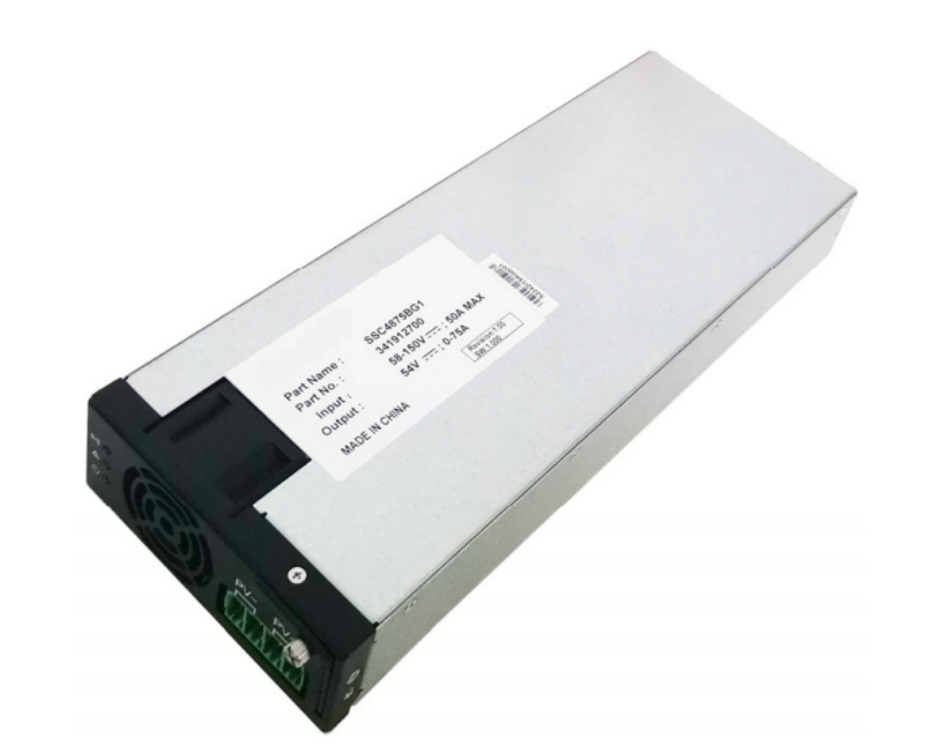
Every second of network uptime depends entirely on stable, efficient AC-to-DC power conversion. The modern digital economy simply cannot pause for unexpected power outages. Telecom infrastructure fails instantly without a rock-solid energy foundation.
Power anomalies cause immediate service drops and severe hardware degradation. These sudden disruptions cost network operators significant revenue and trigger disastrous service level agreement breaches. This is exactly why securing a reliable Telecom Rectifier Module remains absolutely critical for your telecommunication facilities.
RuixiaoTelecom engineers equipment specifically for high-density, fault-tolerant power systems rather than building generic off-the-shelf components. You will learn a practical framework for evaluating, sizing, and implementing these advanced modules. We will explore exactly how to select the optimal power configuration to keep your network running flawlessly under heavy demands.
Efficiency Drives Opex: Selecting a telecom rectifier module with high conversion efficiency (e.g., >96%) significantly reduces long-term operational costs and thermal load.
Modularity Equals Scalability: Hot-swappable architectures allow infrastructure to scale seamlessly without network downtime.
Reliability Requires Redundancy: True system resilience depends on N+1 redundancy and intelligent load-sharing mechanisms, not just individual module specifications.
Environment Matters: Operating temperature ranges and footprint density are non-negotiable evaluation metrics for outdoor telecom cabinets and edge facilities.
Modern telecom networks face severe consequences during power anomalies. You risk complete network downtime and accelerated hardware degradation when supply voltage fluctuates wildly. Every outage frustrates your end-users instantly. It also harms your brand reputation and damages your bottom line. Reliable hardware prevents these disastrous scenarios by acting as an electrical shield.
A rectifier handles a very specific and demanding core mechanism. It continuously converts fluctuating grid alternating current (AC) into the stable 48V direct current (DC) required by telecom equipment. The utility grid rarely delivers perfect power. The module steps in to smooth out these dangerous ripples. It ensures sensitive routing equipment always receives a clean, constant energy supply. When grid voltages sag, the rectifier compensates immediately to keep the 48V bus perfectly flat.
RuixiaoTelecom approaches this technical challenge through strict design philosophies. Their engineers focus heavily on building layers of electrical resilience. They prioritize the following baseline protections in every unit:
Precise voltage regulation to prevent damaging micro-fluctuations.
Robust surge protection to block sudden lightning or grid anomalies.
Extremely low electromagnetic interference (EMI) to protect nearby fiber optics.
You get a protective barrier between the chaotic public grid and your delicate network hardware. This engineering approach stops grid noise from disrupting digital signal processing within the base station.
You need clear metrics to judge equipment performance accurately. We must look beyond flashy marketing numbers to find real-world operational value. Thorough evaluation prevents costly procurement mistakes.
Many buyers fall into the trap of looking only at peak load efficiency. This solitary number rarely reflects everyday operating conditions. You must evaluate efficiency curves across 40%, 60%, and 80% load capacities. Most telecom networks run continuously within these specific mid-range bands. High efficiency at partial loads minimizes excess heat generation inside the rack.
A module running at 90% efficiency wastes 10% of its incoming power as pure heat. Pushing that conversion efficiency to 96% slashes the wasted thermal energy dramatically. You subsequently spend much less money cooling the server room. Always request a full load-efficiency curve document from the manufacturer before purchasing any power hardware.
Space costs premium money in telecom facilities. Higher power density means packing more operational watts into every cubic inch of rack space. This metric becomes crucial when you retrofit legacy cabinets. You often face strict physical limits in older outdoor enclosures.
Dense modules also benefit 5G edge node deployments heavily. These remote sites require massive amounts of power for millimeter-wave antennas but offer minimal physical footprint. High-density units allow engineers to double the capacity of an existing 19-inch rack without pouring new concrete pads.
Telecom equipment must survive brutal environmental extremes. Evaluate wide-temperature operation capabilities carefully. Some remote sites face freezing winters, while others endure scorching desert summers. Hardware failure rates multiply quickly if internal temperatures exceed engineered limits.
You must understand the distinct difference between active cooling and natural convection. Active cooling uses mechanical fans to force air across internal heat sinks. It works beautifully in clean indoor datacenters. Natural convection relies entirely on passive heat dissipation. It excels in dusty outdoor cabinets where mechanical fans would clog and fail.
Cooling Architecture Comparison Chart
Cooling Method | Primary Mechanism | Ideal Deployment Environment | Maintenance Requirement |
|---|---|---|---|
Active Cooling | Fan-driven forced airflow | Indoor datacenters, clean telecom rooms | Moderate (routine fan filter checks) |
Natural Convection | Passive heat sink dissipation | Harsh edge sites, unconditioned cabinets | Very Low (no moving internal parts) |
Engineers must look at the macro picture to build resilient networks. You cannot rely on isolated components alone to guarantee uptime. Proper architecture dictates system survival during catastrophic events.
You can choose between standalone deployments and fully integrated telecom power systems. Standalone units work well for small upgrades or isolated node expansions. Conversely, integrated systems offer a highly cohesive package. They bundle multiple rectifiers, intelligent controllers, and DC distribution panels into one managed chassis. This approach simplifies initial installation and centralizes your remote monitoring capabilities.
True resilience relies heavily on smart redundancy mathematics. The N+1 architecture represents an industry standard framework. The letter "N" represents the exact number of modules required to carry your maximum system load. The "+1" adds a single active backup module to the chassis.
Imagine your base station requires 100 Amps total. Deploying three 50A modules creates a perfect N+1 setup. Two modules deliver the needed 100A smoothly. The third module waits online as an active load-sharing participant. If one module fails unexpectedly, the system continues operating without dropping a single packet. Massive edge datacenters often utilize N+N architectures, building two completely separate power paths for total fault isolation.
Routine maintenance should never cause network downtime. Hot-swappable capabilities allow your field technicians to replace or add modules instantly. You perform this swap without interrupting the live DC bus voltage.
The system controller instantly recognizes the newly inserted module. It forces the new unit to share the load equally with the older units within milliseconds. However, you must avoid forcing a unit into a live chassis blindly. Always inspect the backplane pins for debris before locking a new module into place.
Real-world deployments rarely execute flawlessly without prior planning. You must anticipate common integration friction points to ensure a successful network rollout. Ignoring these risks leads to costly delays.
Integrating a new Telecom Rectifier Module into an existing third-party chassis presents transparent risks. You might struggle to link new hardware into legacy controller frameworks. Older chassis often use proprietary communication pinouts rather than open standards. You must verify physical dimensions and digital handshake protocols carefully.
Do not assume universal plug-and-play compatibility with ten-year-old power enclosures. You might discover the old controller cannot read the alarm states of the modern rectifiers. Always demand a proof-of-concept hardware test before ordering hundreds of replacement units.
Local power grids remain highly unstable in numerous developing regions and rural areas. A reliable module must handle extremely wide input voltage ranges seamlessly. A heavy industrial motor starting nearby can pull the local grid down to 90V AC momentarily.
The equipment must absorb this severe shock. It should survive massive sags dropping to 85V AC and withstand violent spikes pushing 300V AC. Throughout these wild grid fluctuations, the DC output must remain absolutely steady. Even a microsecond output drop will trigger spontaneous system reboots across your entire routing network.
Enterprise telecommunication deployments demand strict regulatory alignment. You absolutely cannot cut corners on safety certifications. These rigorous standards prove hardware trustworthiness to municipal inspectors and corporate insurers alike.
Review this critical certification checklist for your deployments:
CE Marking: Mandatory certification for health, safety, and environmental protection across the European Economic Area.
UL Certification: Proves rigorous safety testing by Underwriters Laboratories, which remains crucial for North American telecom markets.
NEBS Compliance: Network Equipment Building System standards ensure the hardware withstands extreme spatial, thermal, and seismic stress.
Selecting the perfect equipment requires a highly methodical approach. Follow these structured steps to secure the right hardware for your infrastructure project.
You must calculate your precise power needs first. Start with the active current draw of your active equipment. Next, add a strict 20% buffer to accommodate future network expansion. Finally, include the maximum battery charging current required to replenish your backup strings. Summing these three figures gives you the true target capacity.
Load Sizing Calculation Matrix
System Component | Calculation Rule | Design Purpose |
|---|---|---|
Active Equipment Load | Measured Peak Amps | Base operational requirement |
Expansion Buffer | Multiply by 1.20 | Future-proofing for 5G upgrades |
Battery Recharge | Ah Capacity / Recharge Time | Restoring backup power quickly |
Your target deployment site dictates your physical casing requirements. Cross-reference the module Ingress Protection (IP) ratings against the physical location. Check the maximum thermal operational limits carefully. An indoor, climate-controlled datacenter requires vastly different specifications than a roadside cabinet baking in the summer sun.
Deep system visibility prevents sudden failures. Ensure your chosen rectifiers integrate seamlessly with your existing remote monitoring platforms. Check for standard digital protocols like SNMP v3 and RS485. These secure links allow engineers to track temperatures and loads remotely. They enable predictive maintenance strategies, letting you replace aging units before a complete site failure occurs.
Do not guess your final power configuration. We strongly recommend engaging with a technical sales engineer early in the planning phase. Have them run a comprehensive load-profile analysis on your network. This vital step prevents costly undersizing errors before you finalize a large purchase order.
Procuring a reliable power solution remains a critical architectural decision for any network operator. You must meticulously balance upfront capital expenditure against long-term operational resilience. Taking risky shortcuts on power conversion simply invites inevitable network disaster.
RuixiaoTelecom modules provide an evidence-backed pathway to rock-solid power stability. They deliver exceptional electrical performance and thermal endurance when properly matched to your specific system requirements. Prioritize high-efficiency curves, robust N+1 redundancy architectures, and strict environmental compliance.
Ready to fortify your network infrastructure against grid failures? Download the detailed RuixiaoTelecom specification sheet today. Request a custom technical consultation to align our engineered hardware with your exact telecommunication power project.
A: The global standard is -48V DC. Telecom engineers chose negative voltage to drastically reduce galvanic corrosion on grounded copper cables. This specific voltage also aligns perfectly with standard lead-acid and lithium-ion battery bank configurations, ensuring seamless backup power transitions during major grid failures.
A: You use a highly straightforward formula. First, add your Total Load Current to your Battery Recharge Current. Divide that total sum by the individual Module Capacity. Finally, add one extra module to achieve N+1 redundancy. This ensures continuous network operation even if a single unit fails unexpectedly.
A: Many modern modules feature wide-range inputs that accept both voltages automatically. However, specific local grid limitations ultimately dictate your deployment choice. A dedicated 220V AC input model generally achieves higher conversion efficiency and generates much lower thermal output compared to a 110V model pushing the same wattage.
A: High-quality modules boast excellent MTBF (Mean Time Between Failures) ratings. Typical commercial lifespans easily exceed 10 years in the field. However, you must operate them strictly within manufacturer-specified thermal limits and avoid sustained maximum load capacities to achieve this targeted longevity.